Unexplained Stories
A Research Buoy’s Rope Had Been Cut 3,000 Meters Down
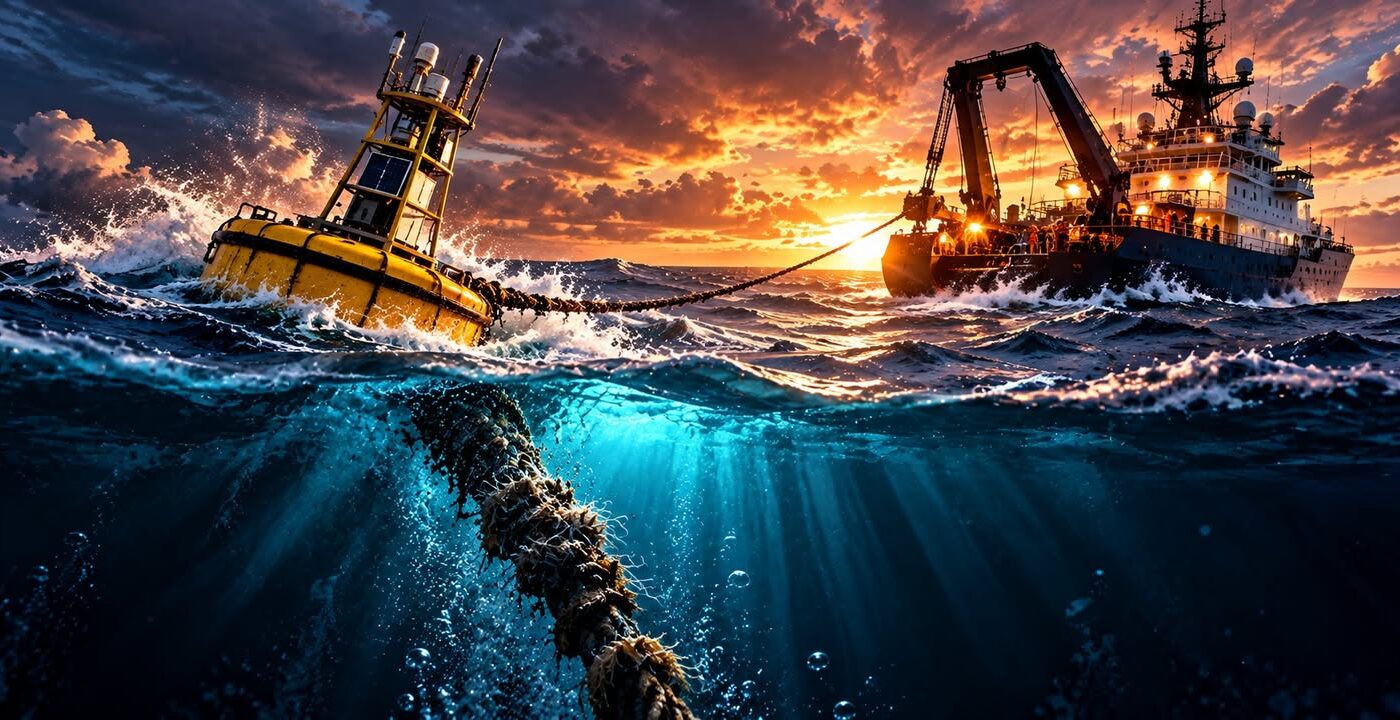
On January 31, 2007, a research buoy in the Atlantic Ocean suddenly broke free from its anchor. The equipment had been sitting in the powerful Gulf Stream for more than two months, collecting information for scientists studying ocean currents. Something had gone wrong nearly three kilometres beneath the surface.
The buoy began drifting east, carried away by the current. Fortunately, its satellite transmitter was still working, allowing researchers to track its movements. When they finally recovered the equipment, they discovered something much stranger than a rope that had simply snapped.
Anchored Nearly Five Kilometres Down
The buoy belonged to the Woods Hole Oceanographic Institution and was part of an experiment called CLIMODE. Scientists were studying how the Gulf Stream exchanges heat with the atmosphere, particularly during winter when cold air moves over the warmer Atlantic waters.
The equipment was designed to stay in position for an entire year. Instruments above and below the surface measured wind, temperature, ocean currents, and other conditions. A heavy anchor held everything in place on the seabed, almost five kilometres down.
Keeping a buoy anchored in the Gulf Stream is no easy job. The current pushes against thousands of metres of rope and cable, creating enormous strain on the equipment. Engineers had designed the system with heavy-duty materials and plenty of extra strength to handle those forces.
The first deployment had been successful, remaining in place for a full year before researchers recovered it. On November 20, 2006, they installed a replacement to continue collecting measurements. Everything appeared to be working as expected.
The Rope Suddenly Went Slack
For the next several weeks, an instrument beneath the buoy measured how hard the current was pulling against the anchor. Under typical conditions, the force reached around 4,000 to 5,000 pounds. That was a tremendous amount of pressure on the mooring, but the equipment was built to handle it.
On January 31, the buoy encountered an especially powerful section of the Gulf Stream. Water was moving at approximately 2.74 metres per second, and the tension climbed to around 7,800 pounds. Even that was within the limits engineers had calculated.
Suddenly, the instrument recorded a dramatic drop in tension. The buoy was no longer attached to the ocean floor and began moving with the current. Scientists could see what had happened from the readings, but they had no way of knowing what had caused the separation.
A Research Ship Went After It
Losing the buoy could have meant losing expensive instruments and months of scientific measurements. Fortunately, the satellite transmitter continued sending its location as the equipment drifted across the Atlantic. Researchers were able to follow those signals and arrange a recovery.
On February 9, the research vessel Knorr reached the drifting buoy and recovered the equipment still attached to it. The crew brought everything aboard so investigators could examine the damaged mooring. They finally had the broken rope in their hands.
The failure had occurred in a section of nylon approximately 3,000 metres below the surface. Scientists examined the recovered end and sent it to specialists for a closer look. They wanted to find out whether the current had stretched the rope beyond its limits or whether something else had damaged it.
The Rope Appeared to Have Been Cut
The examination produced an unexpected finding. According to the researchers, the specialists concluded that the nylon had been cut while under heavy tension. It didn’t appear to have simply broken because the current was too strong.
That was especially surprising because the rope had been designed with a substantial safety margin. The engineers calculated that its breaking strength was at least three times the strongest forces measured during the deployment. Even when the Gulf Stream was pulling with thousands of pounds of force, the nylon should have been strong enough to withstand it.
In 2012, the scientists published their findings in the Journal of Atmospheric and Oceanic Technology. The paper described the mooring as having been "cut by unknown means" at a depth of approximately 3,000 metres.
The researchers couldn’t identify what had caused the damage. But they had recovered the actual rope, examined its condition, and concluded that the failure wasn’t explained by the force of the current alone.
Something Happened in Complete Darkness
Three kilometres beneath the Atlantic is an extraordinary place. Sunlight never reaches that depth, and the water pressure is hundreds of times greater than at the surface. Almost everything happening down there remains hidden unless scientists send specialized equipment to observe it.
The mooring was stretched through this environment under thousands of pounds of tension. If something came into contact with the nylon, the force already pulling against it could have made the resulting damage spread quickly. But there were no cameras watching that section of the rope.
The researchers had instruments measuring the current and the strain on their equipment. They knew when the failure occurred, how strong the current was, and where the rope had separated. What they couldn’t determine was what had happened at that exact location.
An Unexpected Problem for the Engineers
The failure presented a serious problem for a research program that depended on keeping instruments in the same place for months at a time. The first mooring had successfully completed its planned deployment, giving scientists confidence in the design. Now they had lost a second mooring after little more than two months.
Researchers could use the information from the failed equipment to improve future deployments. They could examine the rope, study the loads it had experienced, and reconsider how the system was assembled. But without knowing what had damaged the nylon, they couldn’t be certain what needed to change.
The recovered equipment provided detailed measurements of the hours leading up to the failure.
It also gave scientists a physical piece of evidence that they could examine long after the buoy had been brought aboard.