Unexplained Stories
A Black Stain Spread Across Venezuela’s Highway
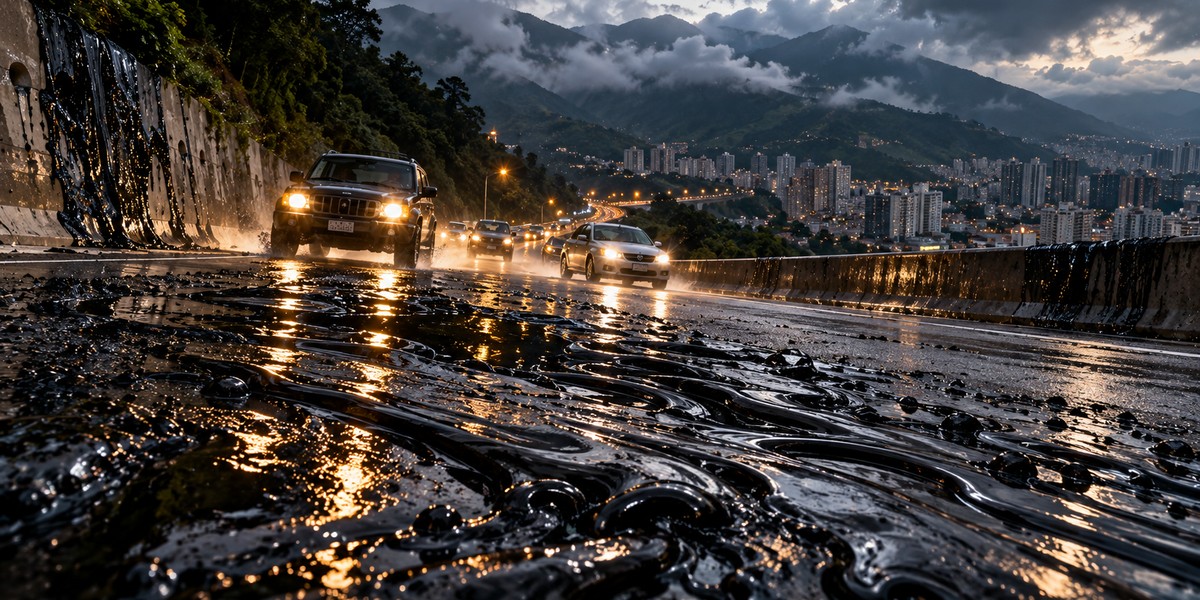
In 1986, road workers in Venezuela noticed a strange black patch on the highway between Caracas and the country’s main international airport. At first, it was only about 50 yards long. It looked like something had spilled onto the pavement, the sort of problem a road crew could easily clean up.
But the patch began spreading. The substance was black, greasy and so slippery that drivers struggled to keep control of their vehicles.
Workers tried washing it away, but their efforts didn’t last. Before long, the mysterious substance had earned a name: La Mancha Negra, or the Black Stain.
A Small Patch Became Miles of Road
The stain appeared along the highway connecting Caracas with La Guaira, a busy route used by thousands of drivers traveling to and from the airport. What started as a small patch eventually affected approximately eight miles of roadway. Some of the worst stretches were on steep hills and inside tunnels, where losing control of a vehicle could be especially dangerous.
Drivers described the pavement as feeling almost like ice. Tires could suddenly lose their grip, leaving motorists unable to steer or brake properly.
Accidents became a serious concern. By the early 1990s, reports connected the slippery conditions with a large number of crashes.
One widely repeated figure claimed that as many as 1,800 people had died in accidents associated with the highway over several years. The exact number directly connected to the stain remains uncertain. Officials now faced a serious road safety problem, with no clear idea of how to stop it.
The Weather Changed Everything
One of the strangest things about La Mancha Negra was how it seemed to react to the weather. During hot, rainy periods, the dark patches reportedly became larger and more noticeable. When temperatures dropped and conditions became drier, they appeared to shrink.
Investigators began wondering whether something underneath the pavement was contributing to the problem. If the substance was simply oil leaking from passing vehicles, why did it seem to change so dramatically with the seasons?
Some engineers suspected that water was reaching material beneath the road and carrying it toward the surface. Others believed the asphalt itself might be involved. The changing patches made it difficult for maintenance crews to know where the next dangerous section would appear.
Experts Examined the Substance
By 1991, the Venezuelan government had brought specialists into the investigation. Engineers collected samples and carried out tests, hoping to discover what the black material contained.
Some reports described a mixture of dust, oil and other substances, including both natural and manufactured materials. Another account identified used engine oil and brake fluid among the ingredients. The results gave investigators several possibilities to consider.
Thousands of vehicles traveled the steep route every day. Older cars and trucks could leak oil, brake fluid and other liquids that mixed with dirt on the pavement.
Problems with drainage offered another possibility. Water moving beneath the road might have interacted with asphalt and accumulated contamination before reaching the surface.
Poor road construction also came under consideration, particularly because the problem had first attracted attention around areas where road work had been carried out. Different experts had different ideas about what was happening. Meanwhile, the government still needed a practical way to protect drivers.
The Cleanup Created Another Problem
Road crews attacked the stain with high-pressure water, detergents and heavy cleaning equipment. Some sections were scraped or resurfaced. When those efforts proved insufficient, authorities tried spreading powdered limestone across the affected pavement.
The idea was to absorb the greasy material and improve traction. Unfortunately, the limestone caused trouble of its own.
Cars and trucks passing over the powder threw clouds of pale dust into the air. Visibility dropped, creating another hazard on a road where drivers were already having difficulties.
Specialized cleaning equipment was eventually brought in from Germany. Some treatments improved the conditions temporarily, giving motorists relief while engineers continued looking for a more lasting solution. The work had become expensive, frustrating and increasingly difficult for officials to explain.
The Black Stain Became Political
As the years passed, La Mancha Negra became more than a highway maintenance problem. Venezuela was experiencing periods of political tension, and the strange substance became part of public arguments about government competence and road safety. Some officials and commentators suggested that people might be deliberately spreading oil or other materials on the streets.
The possibility of sabotage entered the discussion, with political opponents accusing one another of contributing to the problem. Meanwhile, drivers were still dealing with slick patches of pavement.
In 2001, reports of similar black stains appeared on other major roads around Caracas, extending the controversy beyond the original airport highway.
Fifteen years after the first patch appeared, La Mancha Negra was still generating headlines.