Unexplained Stories
Los Angeles Fired 1,400 Shells at Something in the Sky
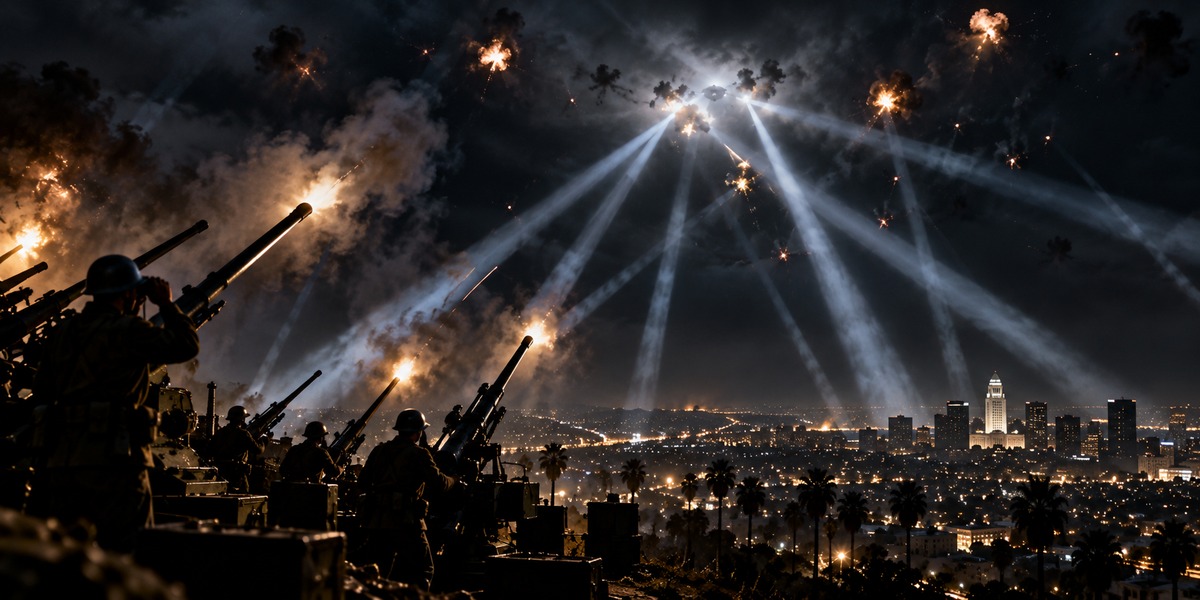
At 3:16 in the morning, anti-aircraft guns opened fire over Los Angeles.
Searchlights swept across the darkness as explosions lit up the sky. Residents rushed to their windows and rooftops, watching the American military fire hundreds of shells at something overhead.
It was February 25, 1942, and the United States had been at war with Japan for less than three months. The shooting continued for nearly an hour. By the time the guns fell silent, approximately 1,400 shells had been fired above the city.
When daylight arrived, military crews went looking for the enemy aircraft. They couldn’t find a single one.
California Was Already on Edge
The Japanese attack on Pearl Harbor had happened just eleven weeks earlier. Americans living along the Pacific coast were nervous about what might come next.
California had military bases, aircraft factories, shipyards and oil facilities that would make valuable targets. Air-raid drills and blackouts had become part of everyday life.
Two nights before the Los Angeles incident, those fears became very real. On February 23, a Japanese submarine surfaced near Santa Barbara and fired shells at the Ellwood oil field. The attack caused relatively little damage, but it proved that Japanese forces could reach the California coast.
Military commanders warned that another attack might be coming. By the early hours of February 25, soldiers stationed around Los Angeles were ready for trouble.
Something Was Coming From the Ocean
Shortly after midnight, military radar reportedly picked up an unidentified object approaching the coast from the Pacific. Officers began tracking the contact, and air-defense units went on alert.
At approximately 2:25 a.m., air-raid sirens sounded across Los Angeles County. Residents were ordered to turn off their lights, leaving enormous sections of the city in darkness.
Thousands of air-raid wardens went to work. Anti-aircraft crews prepared their guns while powerful searchlights searched the sky.
Reports of strange objects began coming in from different locations. Some observers described aircraft moving overhead. Others reported lights or shapes that were difficult to identify.
Whatever people were seeing, the military believed the situation was serious enough to respond. And at 3:16 a.m., the shooting began.
The Sky Exploded Above Los Angeles
Heavy anti-aircraft guns thundered across the city. Shells burst thousands of feet overhead, filling the darkness with flashes of light and clouds of smoke.
Searchlight crews swept their beams across the sky, sometimes bringing several together on the same area. Residents watched from windows, porches and streets as the barrage continued.
Some witnesses believed they could see something caught in the beams. Others described objects moving slowly while shells exploded around them. The guns continued firing until approximately 4:14 a.m., with batteries across the area joining the action at different times.
Pieces of exploding shells fell back toward the city. Homes, buildings and vehicles suffered damage from falling fragments.
The situation also turned dangerous on the ground. Traffic accidents and medical emergencies contributed to several deaths associated with the incident.
Meanwhile, American fighter aircraft remained on the ground. The anti-aircraft crews were fighting whatever had appeared above Los Angeles without help from planes sent to intercept it.
The Photograph That Became Famous
One of the most recognizable images from the incident appeared in the Los Angeles Times. The photograph showed several powerful searchlights meeting in the sky above the city. Bright bursts from anti-aircraft shells surrounded the area where the beams came together.
It became the defining picture of what newspapers called the Battle of Los Angeles. The published photograph had been retouched to make the searchlights and explosions easier to see, as newspapers commonly did at the time. But the image also captured something extraordinary about that night: the American military was directing a huge amount of firepower toward a relatively small area of sky.
Decades later, the photograph became popular among UFO enthusiasts. Some believed the converging lights revealed a large object hovering above the city. The image has appeared in television documentaries, books and countless discussions about unexplained aerial sightings.
The Military Couldn’t Agree
Once the blackout ended, officials had to explain what had happened. Navy Secretary Frank Knox called the incident a false alarm, suggesting that wartime nerves had caused the enormous military response. But Secretary of War Henry Stimson offered a different account.
Stimson initially said that unidentified aircraft had been present over Southern California. His explanation included the possibility of enemy planes operating from hidden locations or conducting reconnaissance. Newspapers quickly noticed that two senior government officials were giving conflicting accounts.
Residents had heard the explosions, watched the searchlights and seen artillery fragments falling into their neighborhoods. They wanted to know what the military had been shooting at. The conflicting statements only increased public interest.
The Weather Balloon Explanation
Later military histories offered another possibility. Weather balloons had been released in the area, sometimes carrying small lights so observers could follow them after dark. Investigators suggested that one of these balloons might have been mistaken for an approaching aircraft.
Once the guns opened fire, the explosions themselves could have made the sky increasingly confusing. Smoke drifted through the searchlights. Shell bursts produced bright flashes, and gunners tried to follow shapes and lights moving overhead.
Under those conditions, one mistaken sighting could have led to several more. The explanation became part of the official history of the event, although it didn’t settle every question raised by witnesses. Some people remained convinced that they had seen an object moving through the barrage.
An Attack With No Enemy Aircraft
In the days following the incident, investigators searched for signs of a Japanese raid. There were no enemy aircraft wrecks, no captured Japanese pilots and no evidence of bombs dropped by attacking planes. After the war, Japanese military records also failed to reveal an air attack on Los Angeles that night.
The incident eventually became known as the Great Los Angeles Air Raid, or the Battle of Los Angeles. It also became one of the most discussed UFO-related events of the Second World War, especially among people fascinated by the accounts of objects reportedly surviving the artillery barrage.
The Night Nobody Forgot
After hours of sirens, darkness and gunfire, Los Angeles returned to daylight. Streets were littered with shell fragments, and residents began learning how widespread the shooting had been.
The war continued, and Los Angeles returned to building aircraft and supporting the American military effort. But stories of that night kept circulating.
Some witnesses remembered strange shapes overhead. Others remembered the deafening guns and the frightening uncertainty of what might happen next.
The soldiers had fired enough ammunition to bring down an entire formation of aircraft.
By morning, there wasn’t a single enemy plane to count.