
Unexplained Stories
Something Ate a Great White Shark at 1,900 Feet
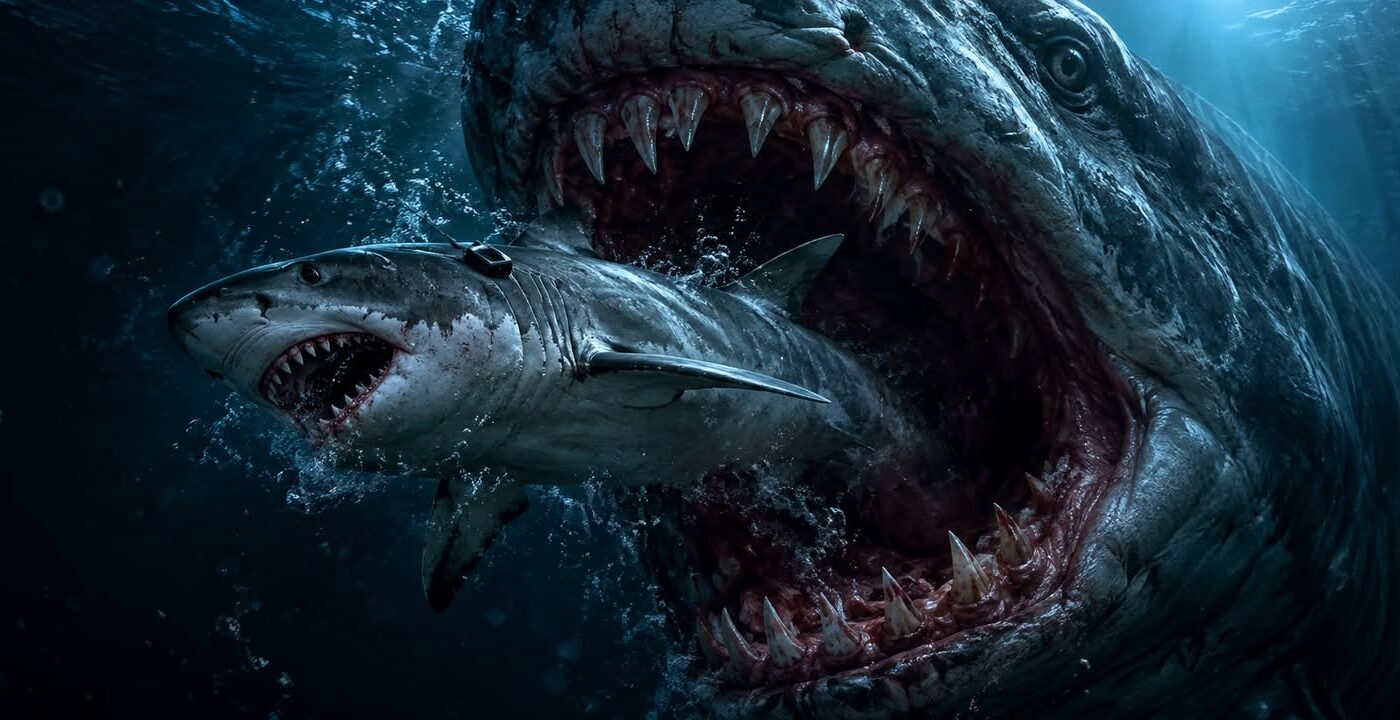
A small electronic device washed onto a beach in Western Australia, carrying a record of something extraordinary.
Months earlier, researchers had attached it to a female great white shark nearly ten feet long. They called her Shark Alpha, and the device was supposed to track her movements through the ocean. But when scientists recovered the tag near Bremer Bay, Alpha was gone.
The researchers connected the device to their equipment and downloaded its recordings. The numbers revealed something nobody had expected.
Alpha’s Journey Through Australian Waters
The shark was part of a research project studying the movements of great whites along Australia’s western coast. Researchers fitted her with an electronic tag that recorded depth and temperature. The device was designed to detach eventually, float to the surface, and allow scientists to recover the information stored inside.
For months, the recordings showed Alpha traveling thousands of kilometers, swimming north toward Exmouth before returning south toward Bremer Bay. Every dive became part of the record, providing a glimpse into her underwater travels. But in the early hours of Christmas Eve, the readings suddenly changed.
Something Happened at 1,900 Feet
At approximately four in the morning, Alpha’s tag began descending. The recorder eventually reached a depth of about 580 meters, or 1,900 feet. Down there, sunlight barely penetrates, and the surrounding water was close to 8°C.
Great white sharks are capable of deep dives, so the descent alone wasn’t particularly alarming. What happened next was another story.
The tag’s temperature suddenly shot upward, climbing from approximately 8°C to 26°C. That’s an increase of 18 degrees Celsius in water that remained extremely cold. The researchers suspected the tag had entered the digestive system of another animal.
Eight Days Inside Something Else
The temperature didn’t return to normal after a few minutes. Instead, the recorder remained unusually warm for approximately eight days.
During that time, it continued recording changes in depth. Whatever was carrying it moved through the water, sometimes approaching the surface and sometimes descending to roughly 100 meters.
The readings suggested that the device was inside a living creature whose body was warmer than the surrounding ocean. Eventually, the temperature dropped again. The tag was released into the water, floated upward, and later washed ashore.
The researchers now had evidence of an extraordinary encounter. But the recorder couldn’t identify the creature that had swallowed it.
That left an unsettling mystery: what kind of animal could overpower a great white shark?
Searching for an Ocean Super Predator
Filmmaker and researcher David Riggs had been involved in documenting the shark-tagging project. When he learned what the recorder had captured, he became fascinated by the possibility that something considerably larger had attacked Alpha.
Great whites are among the ocean’s most formidable hunters. They’re powerful, fast, and equipped with sharp teeth capable of tearing through large prey.
Alpha was already a substantial predator herself. Riggs began investigating the large animals inhabiting the waters around Bremer Bay, where sharks, killer whales, and other marine predators gather to feed.
One possibility was especially intriguing. Perhaps Alpha had encountered a much larger member of her own species.
Could Another Great White Have Done It?
Great white sharks have an unusual ability to keep parts of their bodies warmer than the surrounding water. They use a specialized heat-exchange system that helps conserve warmth generated by their muscles. This allows them to hunt in cold water while maintaining the power needed for sudden bursts of speed.
If a larger great white had swallowed Alpha’s tag, its internal temperature might explain the mysterious readings. Riggs and his team examined large great whites using thermal imaging equipment. Some of the temperatures they measured, around 26°C to 27°C, were remarkably close to the recording from Alpha’s tag.
A large shark was now a serious suspect. Somewhere off the Australian coast, one great white might have encountered another powerful enough to kill and eat it.
Killer Whales Were Also Suspects
There was another predator capable of attacking a great white: the orca. Killer whales are enormously powerful hunters, and researchers have documented them attacking sharks, sometimes targeting their nutrient-rich livers.
National Geographic interviewed shark researcher Camrin Braun about Alpha’s disappearance in 2014. He considered an orca a plausible explanation for the unusual temperature recorded by the tag.
Orcas maintain warmer body temperatures than sharks, which offered another possible explanation for the recorded heat. The two suspects presented a fascinating puzzle.
One was a larger shark, possibly hunting another member of its own species. The other was a highly intelligent marine mammal capable of tackling dangerous prey. And the encounter had happened in water too deep for anyone to witness.
The Mystery That Made Headlines
Alpha’s disappearance eventually became the subject of the Smithsonian Channel documentary Hunt for the Super Predator, released in 2014. The story captured international attention because it reversed a familiar picture of the ocean.
Great whites are usually presented as the animals doing the hunting. This time, researchers were investigating what might have hunted one of them.
The documentary followed Riggs as he searched for clues among the large predators inhabiting the waters off Western Australia. The electronic tag had given him an unusual starting point: a record of the final movements surrounding Alpha’s disappearance.
The tag had survived.
Whatever swallowed it had carried the secret away.