Unexplained Stories
They Walked Across a Desert That Wasn’t on the Map
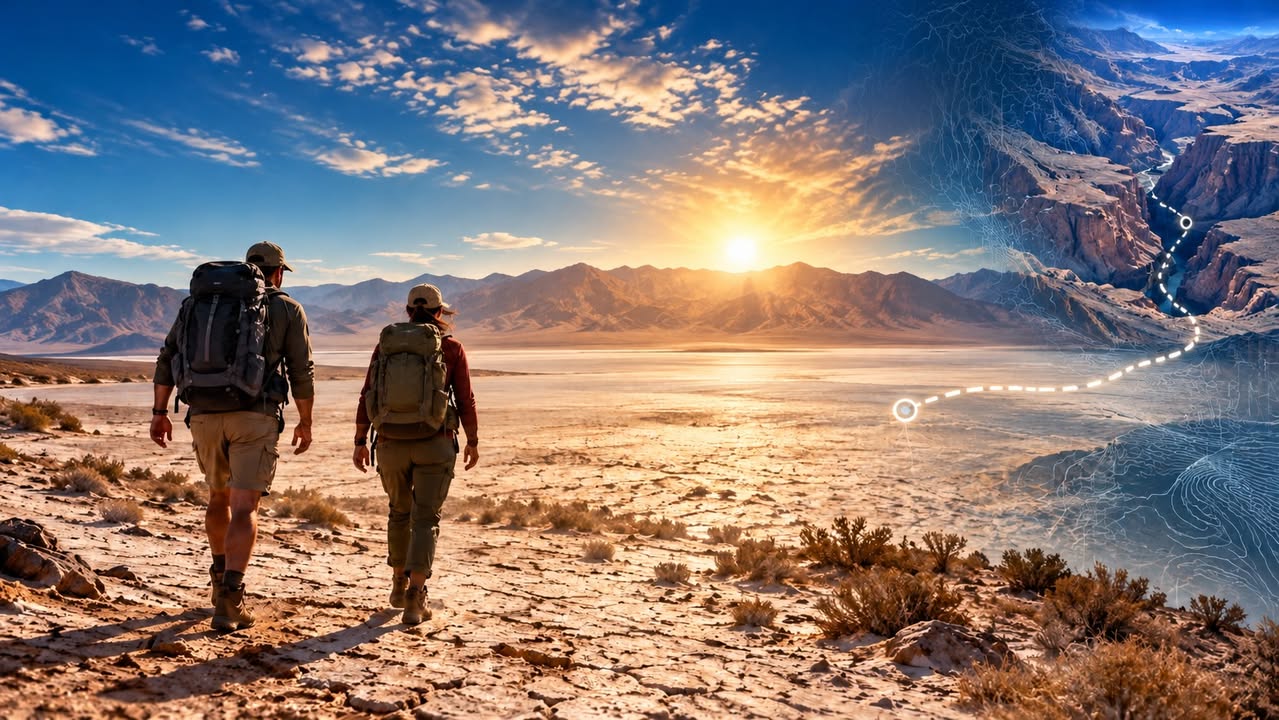
In May 2017, two hikers were reportedly exploring California’s Anza-Borrego Desert when they came upon something unexpected. They had been following a narrow canyon through rugged country, surrounded by steep ridges and rocky formations.
As they continued, the canyon opened into a broad, pale basin. The ground ahead was remarkably flat, stretching toward distant mountains without the deep gullies and broken terrain they’d encountered earlier.
The hikers decided to continue across it. The open ground made walking easier, and nothing about the place seemed particularly unusual at the time.
Forty Minutes Across an Empty Basin
According to the account, the pair spent approximately 40 minutes crossing what looked like an enormous dried-up lakebed. The surface was pale and firm, with no steep ravines forcing them to change direction.
Mountains remained visible in the distance, helping them keep their bearings. They walked at a comfortable pace, following the open ground toward a ridge on the opposite side.
Eventually, they reached the ridge and began climbing. When they crossed to the other side, the familiar desert returned. The terrain matched what they’d expected to encounter, and they continued their hike without difficulty.
Nothing during the walk had given either hiker a reason to think they’d experienced anything extraordinary. That changed when they returned home and examined their GPS recording.
The Map Showed Something Different
The hikers reportedly downloaded the GPS data from their trip and compared it with a topographic map. They expected to see their route passing through a canyon, across the basin, and over the ridge.
Instead, the map showed a complicated stretch of badlands where they remembered walking across flat ground. The area contained steep slopes, deep washes, and rough terrain that should have made their journey considerably more difficult.
They examined the route more closely. The GPS track appeared to cross formations that would normally require careful navigation, yet neither hiker remembered encountering those obstacles.
There was another unusual detail. According to the story, the recording showed a continuous route through the disputed area, without any obvious jump in the coordinates. The track seemed to indicate that they had traveled across terrain neither person remembered seeing.
Both Hikers Remembered the Same Place
The pair reportedly compared their memories of the journey. Both recalled the same broad, pale landscape, with distant mountains and relatively easy walking.
Neither remembered spending that section of the hike climbing through rugged gullies or repeatedly changing direction to avoid obstacles. The difference was especially puzzling because they had traveled together.
The GPS timestamps added another question. The recorded journey appeared to have taken less time than someone might expect when crossing the difficult ground shown on the map.
If the hikers’ memories were accurate, they had walked through a landscape that seemed much easier to cross than the one their route indicated. The account eventually attracted an explanation considerably stranger than a mapping problem. Some suggested the hikers might have encountered the desert as it had existed long before its present landscape formed.
The Desert Once Looked Very Different
Anza-Borrego Desert State Park covers more than 600,000 acres of Southern California. Its landscape includes mountains, canyons, dry lakebeds, and enormous areas of heavily eroded badlands.
Much of the region was shaped by water over millions of years. Ancient rivers carried sediment into broad basins, and lakes once occupied areas that are now completely dry.
As the landscape changed, erosion gradually carved through those deposits. Water cut channels into the softer ground, creating the steep formations and winding gullies visible today.
Scientists have studied the exposed layers of rock for decades, using them to understand what the region looked like in the distant past. Some areas that now contain rugged badlands were once much flatter, with broad deposits of sediment stretching across the desert floor.
That history made the hikers’ description especially interesting. A wide, pale basin was exactly the kind of landscape that might have existed in parts of Anza-Borrego before erosion transformed the terrain.
For people interested in time slips, the possibility was fascinating. What if the hikers had briefly crossed an older version of the desert?
There Was No Obvious Moment of Change
One detail separated this account from many other strange encounters. The hikers reportedly experienced no dramatic event when they entered the unfamiliar landscape.
There was no flash of light, sudden darkness, or sensation of being transported somewhere else. They simply followed the canyon until it opened into the basin.
The same thing happened when they left. After climbing the ridge, they found themselves surrounded by ordinary desert terrain again.
Neither person apparently noticed a sudden transition. They hadn’t become disoriented or lost track of time, and they didn’t have to search for a way back.
Whatever made that section of the hike unusual only became apparent when they compared the journey with their recorded route.
What Waits Beyond That Canyon
The most intriguing possibility is that the hikers encountered something they could find again. They had entered the basin through a canyon and left by climbing a ridge, giving the experience a beginning and an end in recognizable terrain.
Imagine returning to that canyon, knowing what the map says lies ahead. You would recognize the rocks and the surrounding mountains, but the view around the next bend could be an entirely different story.
Anza-Borrego is full of narrow passages where the landscape remains hidden until you’re almost upon it. A canyon can suddenly open into a valley, while a ridge can conceal everything on its opposite side. The hikers had followed an ordinary-looking route into a place they never expected to find.
If they were to return, they might discover the same pale basin stretching toward the mountains. Or they might find themselves standing among the steep gullies and broken ridges shown on their map, wondering where that easier passage had gone.
The first time, they had no reason to stop and study the place.
A second visit might be a very different experience.