Unexplained Stories
Something Exploded on a Spanish Hillside. No Meteorite Was Ever Found
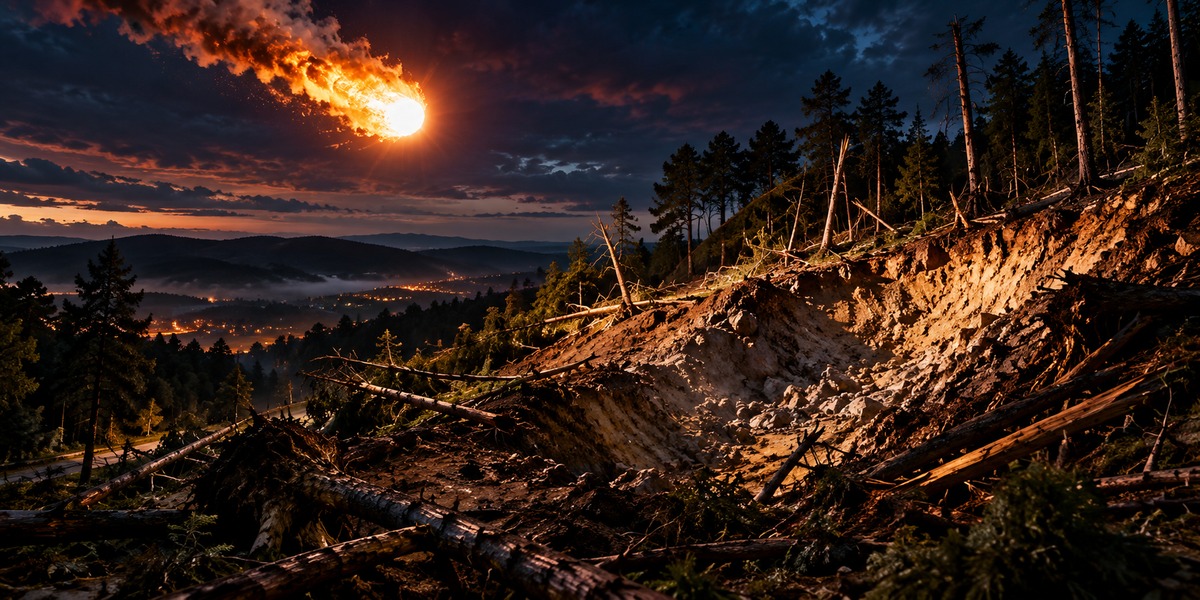
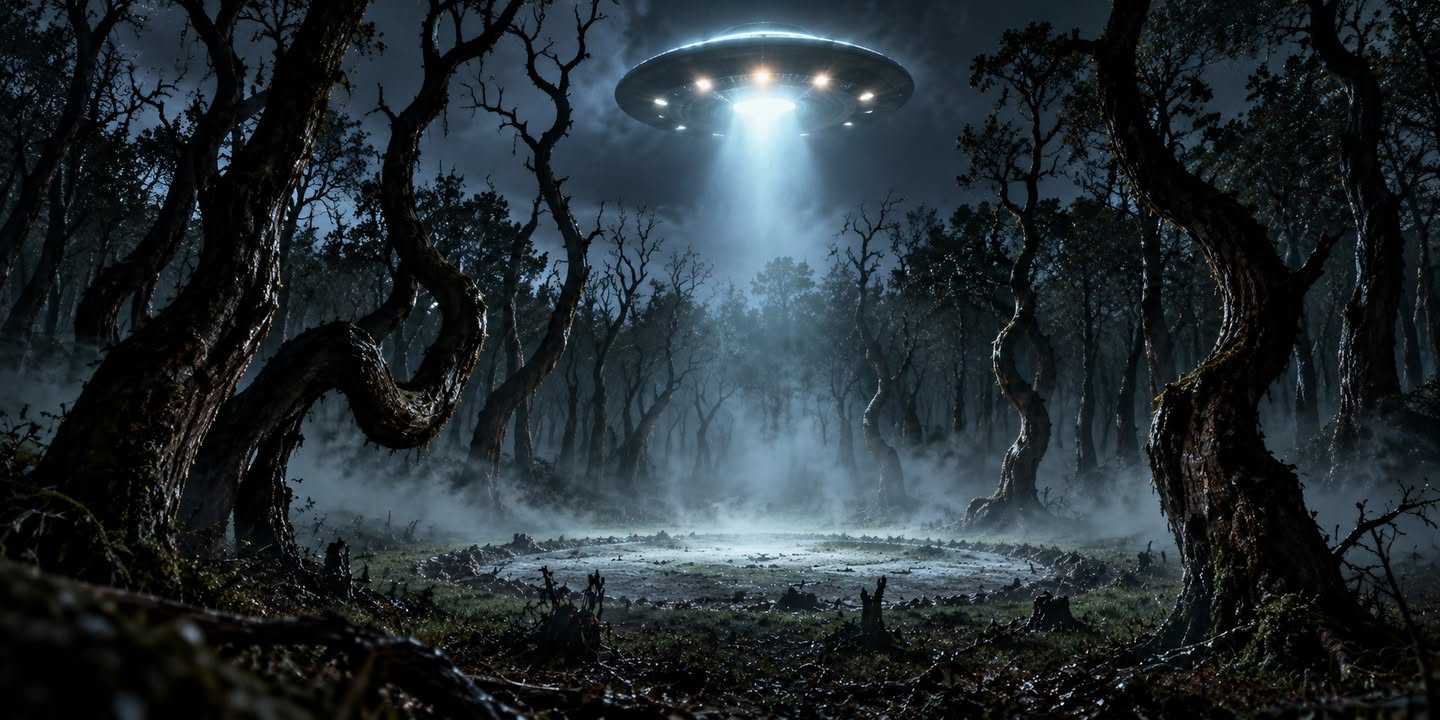
Before sunrise on January 18, 1994, people in northwestern Spain saw a brilliant object streaking across the sky.
It looked like a meteor, and witnesses around Santiago de Compostela watched it travel overhead. Around the same time, something violent happened on a wooded hillside near the village of Cando.
Large pine trees were uprooted and thrown downhill. Soil and broken vegetation were scattered across the surrounding forest, leaving a huge section of the slope torn apart.
When researchers investigated the damage, they expected to find evidence of a meteor strike. What they discovered was much stranger.
A Hillside Had Been Blown Apart
The damaged area measured approximately 29 metres long and 13 metres wide. At its deepest point, the depression reached about 1.5 metres.
Mature pine trees, some standing more than 20 metres tall, had been ripped from the ground. Several were thrown far enough downhill to cross a nearby road.
Investigators noticed something remarkable about the trees that remained standing. Dirt and pieces of vegetation were embedded in their trunks more than three metres above the ground. Whatever had happened had launched debris high into the air.
The depression itself presented another puzzle. Its lower edge remained relatively intact, with a steep interior wall.
That seemed odd for an ordinary landslide, where soil and vegetation generally move together downhill. The damage suggested something far more violent.
The Search for a Meteorite
The bright object seen overhead offered investigators an obvious place to begin. If a meteor had struck the hillside, fragments might still be buried in the disturbed earth. Researchers searched for unusual rocks, minerals, and other material that didn’t belong to the surrounding landscape.
They also examined the soil for changes caused by an object striking the ground at tremendous speed. But their search came up empty.
Everything they recovered appeared to belong naturally to the site. There were no fragments or characteristic signs of a high-speed impact.
Researchers from the University of Santiago de Compostela and their collaborators eventually published their findings in Meteoritics & Planetary Science in 1998. The evidence was pointing investigators away from the sky.
The Fireball Presented Another Puzzle
The research team examined eyewitness reports from the morning of January 18, hoping to reconstruct the path of the luminous object. A typical meteor creates a brilliant streak as it travels through Earth’s atmosphere. Its speed, direction, and appearance can help astronomers work out what witnesses saw.
But the descriptions collected around Santiago de Compostela didn’t fit the expected behaviour of an ordinary meteor. The researchers now faced an unusual combination: a damaged hillside and a mysterious light reported in the same region.
They began exploring whether the two events could have shared a single cause. Their attention turned beneath the hillside.
An Explosion From Underground
The researchers proposed that gases trapped below the surface might have accumulated under pressure. If that pressure suddenly escaped, it could produce a violent eruption, blasting soil and vegetation outward. This offered a possible explanation for the steep wall and the unusual pattern of damage surrounding the depression.
Rather than a meteor crashing into Cando, the hillside itself might have erupted. But the theory still needed to account for the brilliant object witnesses had seen overhead.
A Fireball Rising Into the Sky
According to the researchers’ proposal, the escaping gases and particles could have formed a rapidly rising cloud.
As the material moved through the atmosphere, electrical charges might have developed within it. Under the right conditions, that activity could produce a luminous phenomenon visible over a considerable distance. People watching from the surrounding countryside might have mistaken the resulting light for a meteor.
That gave the researchers a remarkable possibility: the explosion itself could have produced the fireball. What began as an investigation into a possible meteor strike was turning into a study of forces beneath Earth’s surface.
Reconstructing an Extraordinary Event
The Cando investigation brought together astronomy, geology, and atmospheric physics. Scientists examined photographs, witness accounts, the positions of fallen trees, and the way debris had been distributed around the damaged area. Each observation helped them work backward toward the morning of January 18.
But they faced a serious problem. Nobody had directly observed what happened beneath the ground, and the hillside had already been transformed by the time investigators arrived.
The researchers could reconstruct the damage and develop a possible explanation for it, but they couldn’t watch the event unfold. Their 1998 paper offered an unusual theory that connected the observations from the ground and the sky.
What Lay Beneath Cando?
After the investigation, the damaged section of forest remained an extraordinary sight. The torn earth, scattered pines, and debris embedded high in nearby trees showed just how violent the event had been. Yet the researchers’ work raised an intriguing possibility about the hillside itself.
Somewhere beneath that forest, gases may have been building pressure for an unknown length of time.
And on one January morning, the ground may have finally given way.