Cryptids & Creatures
A Creature Killed Nearly a Hundred People in the French Countryside
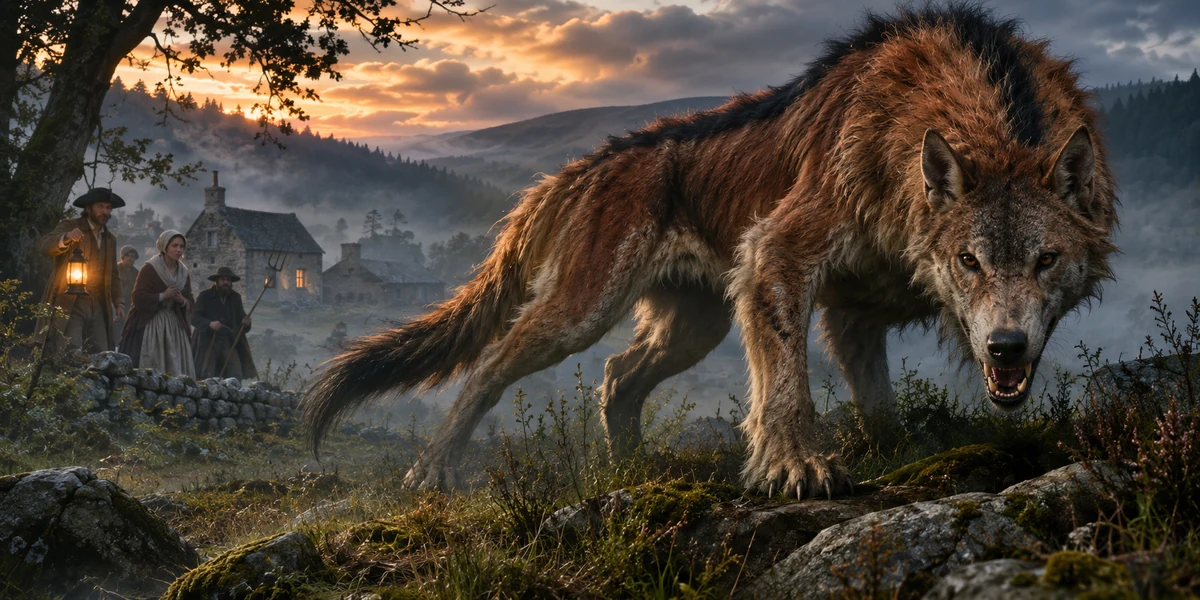
In the spring of 1764, a young woman tending cattle in southern France spotted an animal moving toward her. It looked something like a wolf, but its size and appearance scare her. The cattle gathered around her and drove the creature away before it could reach her.
On June 30, fourteen-year-old Jeanne Boulet was tending livestock near the village of Ubac when she was attacked. She did not survive, and the local priest recorded her death in the parish register.
Within weeks, families in the surrounding countryside were hearing about more people attacked while working the fields. The place was Gévaudan, a rugged region of forests, hills, and scattered farming villages in what is now southern France.
Shepherds had to take their animals into open country, often with children doing much of the work. The creature began appearing in places where those children had little chance of reaching help.
The Attacks Spread From Village to Village
By the autumn of 1764, the attacks had become widespread. Women and children were being killed or injured across a growing stretch of countryside, and survivors returned with frightening descriptions of what had chased them.
Families began sending their children out in groups rather than allowing them to tend livestock alone. The animal did not seem afraid of people gathering together. Witnesses described it approaching shepherds in broad daylight, sometimes within sight of houses or grazing animals.
Even when villagers armed themselves with sticks and farm tools, the attacks continued. News reached the Courrier d’Avignon, a newspaper whose editor, François Morénas, began publishing accounts from the region.
Other newspapers picked up the story, and the mysterious attacker acquired a name that spread across France: the Beast of Gévaudan. By November, readers in Paris were following the terror unfolding.
Nobody Could Agree on Its Appearance
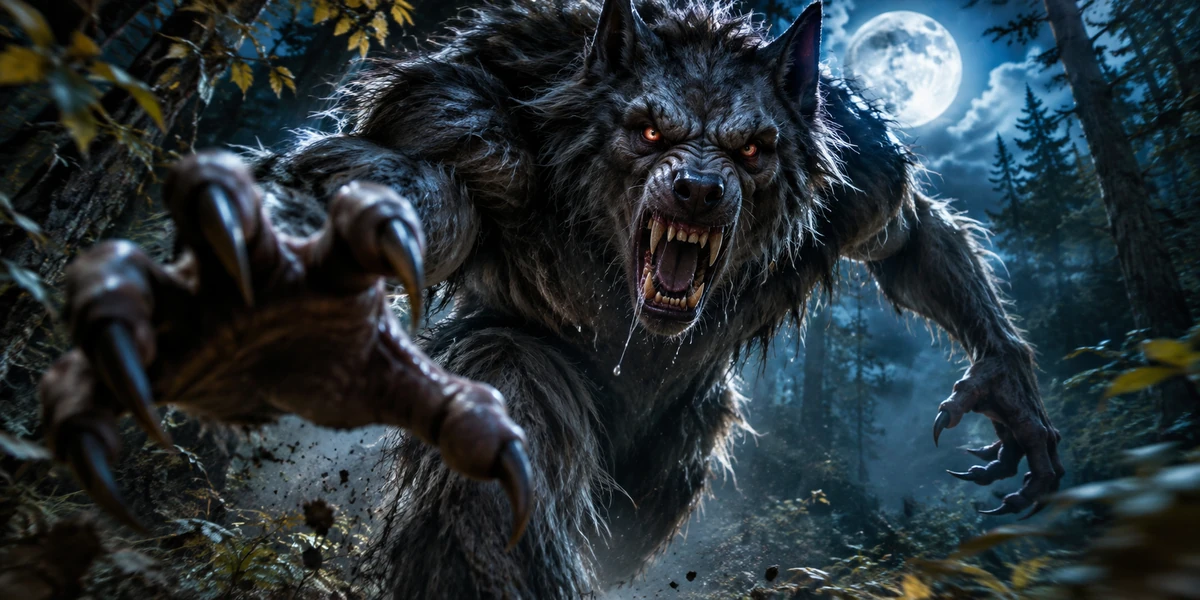
Descriptions of the creature were more disturbing than the name alone. Some people saw a large wolf-like animal with a long muzzle, while others described a broad chest, a thick tail, and reddish fur marked by a dark stripe along its back.
A few survivors insisted that its shape and movements did not resemble the wolves they knew. Étienne Lafont, a government official helping coordinate the response, wrote that the animal was much bigger than a wolf and had a snout resembling a cow’s.
Captain Jean-Baptiste Duhamel, who led one of the first hunts, also struggled to describe it. His description compared its body to a leopard’s and its chest to a horse’s. As the stories crossed France, artists began producing prints of the Beast.
Some showed a long-bodied creature with powerful legs and an enormous jaw, while others made it look like a cross between several animals. Villagers had no single image to help them recognize what was roaming the hills, and every new sighting added another detail.
The Children Who Refused to Run
On January 12, 1765, a group of young cattle herders found themselves facing the creature. One of the boys, Jacques Portefaix, helped the others hold their ground with sticks fitted with sharp points.
Working together, they drove the Beast away and survived an encounter that could easily have ended like many others. Their courage reached the court of King Louis XV.
The children received rewards, and Portefaix was offered an education at the king’s expense. In a region that had spent months hearing about losses, their escape became a story of hope.
Another desperate struggle took place in March, when Jeanne Jouve fought to protect her children during an attack. She resisted the animal, but one of her young sons died from his injuries.
Her attempt to save her family brought recognition from the authorities, yet no one had caught the creature responsible. In August, a young woman named Marie-Jeanne Vallet faced the Beast near Auvers.
She fought back with a bayonet attached to a pole and wounded the animal in the chest. Her escape earned her the name the Maiden of Gévaudan, and a statue still remembers her heroic stand today.
The King Sent His Best Hunters
The authorities had been trying to stop the attacks for months. Duhamel organized soldiers and local volunteers, searched the countryside, and set traps, but the animal repeatedly escaped. Hunting parties covered enormous stretches of forest while families continued living with the danger.
In 1765, the famous Normandy wolf hunter Jean-Charles d’Enneval arrived with his son to take over the search. He came with a reputation of killing hundreds of wolves and was expected to finish the job.
The Beast avoided him too, and the attacks went on. King Louis XV finally sent François Antoine, an experienced royal gun-bearer and bodyguard.
Antoine and his men searched around the abbey of Les Chazes, where they encountered a very large wolf in September 1765. Antoine killed the animal, and its body was preserved and sent to the royal court.
France celebrated what seemed to be the end of the nightmare. Antoine received a reward, and the court accepted the dead wolf as the creature that had terrorized Gévaudan. For a short time, villagers believed it was safe to return to the fields.
The Beast Returned After Its Death
The victory did not last. By December 1765, new attacks were being recorded in Gévaudan.
Families who had tried to resume ordinary life found themselves petrified of the surrounding countryside again. The royal court was no longer eager to hear about another Beast.
Officials had announced a victory, the dead wolf had been sent to Versailles, and Antoine had received his reward. The villagers were left to deal with a danger that had not disappeared. Over the next eighteen months, dozens more attacks were linked to the creature.
Later historical recordings count roughly thirty further deaths after the royal hunt, bringing the total over the three-year period close to one hundred. The people living around Mont Mouchet continued trying to protect their families while another round of hunts took shape.
A Local Hunter Made the Final Shot
In June 1767, the latest attacks pushed local nobleman the Marquis d’Apcher to organize another search. The hunters moved through the wooded slopes around Mont Mouchet, country they knew far better than the royal parties had.
Among them was Jean Chastel, a local man who had been involved in earlier hunts. On June 19, Chastel shot an animal described as a large, unusual wolf-like creature.
Its appearance was recorded as having a heavy head and a coat mixing reddish, white, and gray fur. The men examining it believed they had finally found the animal that had brought years of fear to the region.
This time, the killings stopped. No further deaths were linked to the beast after Chastel’s hunt, and the countryside gradually returned to its daily routines. The contrast with the celebrated royal victory two years earlier made Chastel a local hero.
The Creature Left a Mystery Behind
The surviving records do not give everyone the same picture of the animal. Over the years, writers have argued about the possibility of several predators, an unfamiliar large cat, or something else entirely.
The strongest evidence for the end of the attacks is simply what happened after June 19, 1767: the deaths stopped. Today, the region remembers more than the creature itself.
A statue near Auvers honors Marie-Jeanne Vallet, who faced it with a makeshift weapon, while Jean Chastel is commemorated near the hills where the final hunt took place. Their monuments preserve the names of ordinary people who stood against a danger that had reached even the court of the king of France.