Unexplained Stories
The Ghost Plane Over Derbyshire That Vanished Before It Hit the Ground
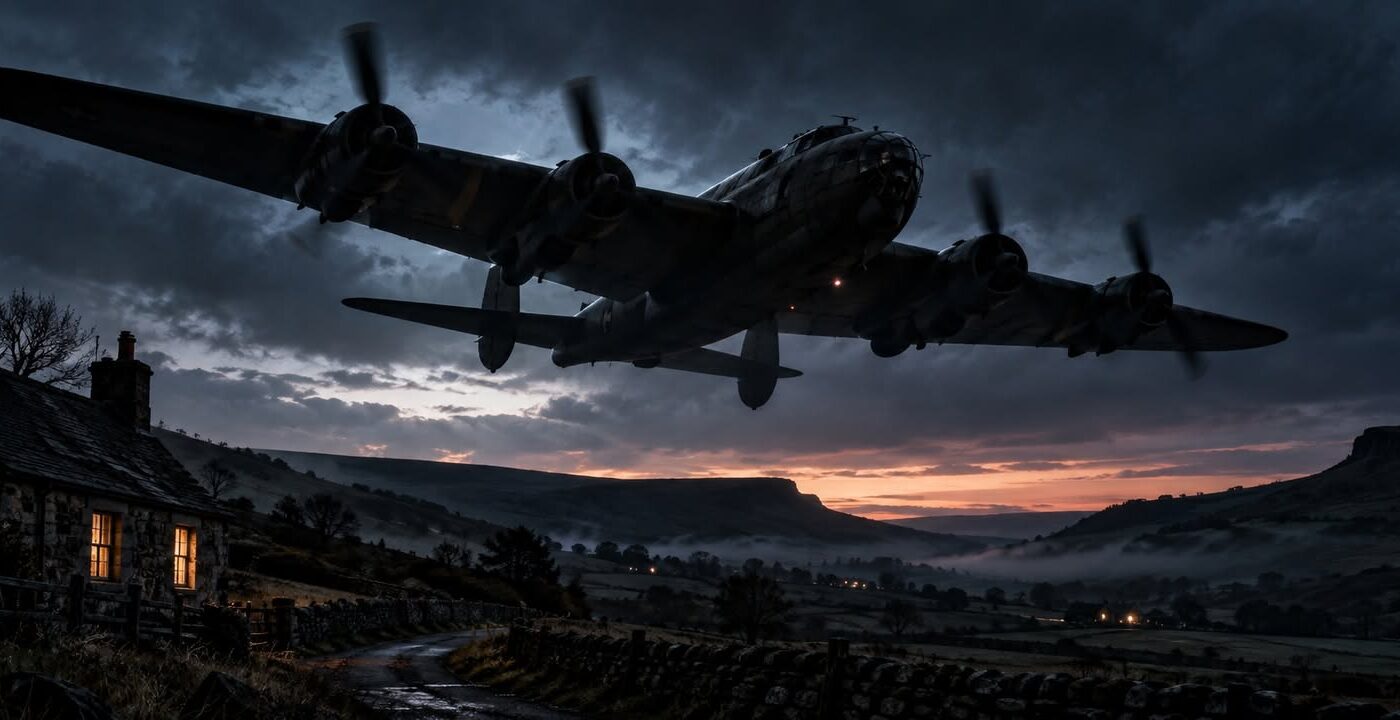
People living near the Peak District in England began reporting something alarming on the night of March 24, 1997.
A large aircraft had been seen flying dangerously low over the countryside. Some witnesses reported hearing an enormous explosion, while others described an orange glow appearing on the horizon.
Police feared that a plane had crashed somewhere on the remote moorland. Emergency crews were called out, helicopters took to the sky, and rescuers began preparing for what could be a major disaster.
But when the search teams reached the suspected crash area, they couldn’t find an aircraft. Not even a piece of wreckage.
A Strange Night Over Howden Moor
The reports came from the area around Howden Moor, a remote stretch of the Peak District known for its rugged hills, reservoirs and open countryside. Witnesses described aircraft flying unusually low that evening. Gamekeepers in the area also reported an explosion and a bright orange glow in the distance.
The combination was alarming enough for South Yorkshire Police to treat the incident as a possible aircraft crash. By approximately 10:30 p.m., around 40 police officers had been mobilized.
A West Yorkshire Police helicopter joined the investigation, followed by an RAF Sea King. Mountain-rescue teams were also called into action as authorities tried to identify where the aircraft might have come down.
The countryside was difficult to search even in daylight. At night, with cold conditions and miles of open moorland, the task became considerably harder.
Rescuers Spread Across the Hills
By the early hours of March 25, approximately 141 volunteers from all seven Peak District mountain-rescue teams were involved in searching the area. Officers and rescue workers spread across the moors with search dogs, examining locations where an aircraft might be hidden. Helicopters flew overhead, scanning the ground for signs of fire or injured survivors.
The RAF established a temporary danger area around Howden Reservoir to allow search aircraft to operate safely. As the hours passed, however, an unusual problem emerged. Nobody had reported an aircraft missing in the area, and no emergency beacon was leading rescuers toward a crash site.
Police contacted aviation authorities, hoping to learn whether any flight had experienced an emergency. Manchester Airport reported no relevant distress calls, while civil and military radar checks failed to identify a missing plane.
Nothing on the Ground
The search continued through the night as rescuers examined difficult terrain around Howden Moor. By daylight, helicopters and ground teams had covered large sections of countryside. They found no fresh aircraft debris, impact crater or signs of a recent fire. There were no injured passengers or bodies, and nothing resembling a recent crash site appeared.
By approximately 2 p.m. on March 25, authorities began scaling down the operation. After an entire night of searching, emergency crews had no aircraft to recover.
The incident attracted attention because the search had been launched in response to multiple witness reports. People had heard and seen things convincing enough to bring out police, military helicopters and more than a hundred volunteers. Yet investigators could find no corresponding aircraft accident.
The Military Records Raised Questions
As interest in the case grew, researchers began examining what else had been happening in the skies over northern England that night. Aviation and UFO researcher David Clarke later obtained information through Freedom of Information requests. The records revealed that a substantial military exercise involving fighter aircraft had been taking place on March 24, 1997.
That information hadn’t been connected with the original emergency response in a way that resolved the incident at the time. The British Geological Survey had also recorded two disturbances resembling sonic booms. Investigators couldn’t establish which specific aircraft had produced them.
Those records introduced new questions about the timing and nature of the reported explosion. They also revealed that the skies had been considerably busier than the original search teams may have realized.
Another Aircraft Appears in 2018
On March 26, 2018, almost exactly 21 years after the Howden Moor incident, people in Derbyshire reported another unusual aircraft. Witnesses described a large, military-looking plane flying low over the countryside. Some compared it to an old Douglas Dakota or a Lancaster bomber.
One witness, Lyndsey Taylor, reportedly experienced radio interference shortly before noticing the aircraft. She also described it as unusually quiet.
The reports revived memories of the earlier mystery. This time, the RAF confirmed that three C-130 Hercules transport aircraft from RAF Brize Norton had been conducting a routine flight over the Peak District that evening. The confirmation provided a possible connection to known military activity, but the story had already captured public attention.
For people familiar with the Howden Moor incident, another low-flying aircraft appearing around the same time of year was an intriguing coincidence.
A Landscape With an Aviation History
The Peak District has a long history of military flying and aircraft accidents. Wreckage from earlier crashes can still be found in parts of the surrounding hills, where difficult terrain has preserved reminders of Britain’s wartime and postwar aviation history.
Those remains have helped give the region a reputation for unusual aircraft stories. The Howden Moor incident became particularly memorable because the emergency response was so extensive. Unlike an isolated report of a strange object, this event sent real rescue teams into the hills in search of a possible disaster.
The later Derbyshire sightings gave the old story renewed attention, introducing it to people who had never heard about the events of March 1997.
The Sounds Recorded That Night
Among the most intriguing pieces of evidence are the two sonic-boom-like events recorded by the British Geological Survey. Those recordings preserved signs of powerful disturbances around the time witnesses were reporting unusual activity overhead. Unlike fleeting impressions of lights or aircraft shapes, the measurements remained available for later examination.
Researchers could study them long after the police and rescue teams had left the moors.
The instruments had captured something, even though investigators couldn’t connect the readings to a specific aircraft.